Northampton County
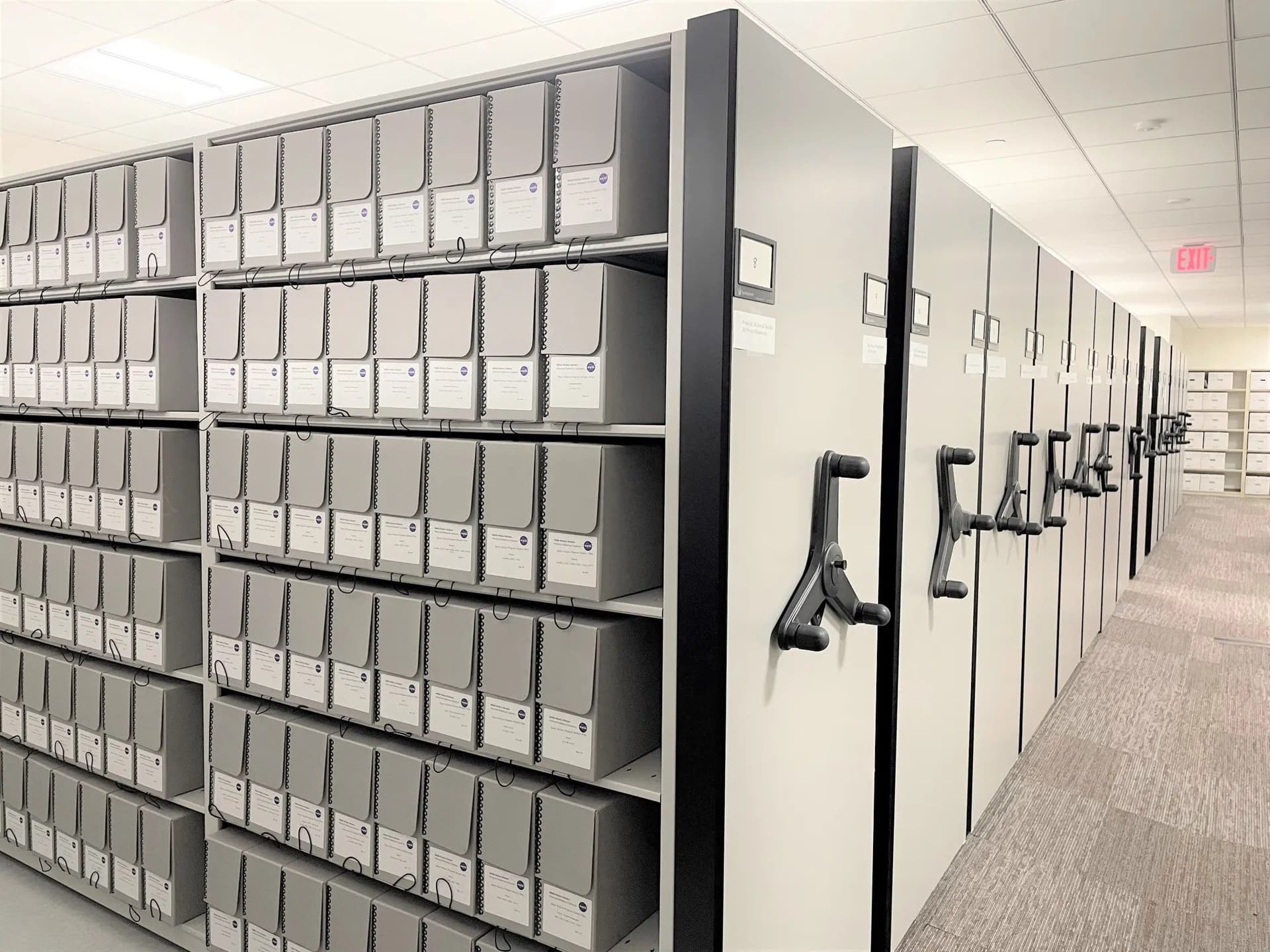
Reynolds designed and installed a high-density storage system sized for current needs with room to grow, organized and protected with locking carriages and a barcode tracking system — bringing records back on-site.
County document-management planning can combine digitization, searchable repositories, public-records request workflows, retention mapping, and access controls. Reynolds validates the county's approved schedules and procedures, source volumes, permissions, integrations, procurement constraints, testing, training, and phased rollout plan. The county remains responsible for legal and records approval; configuration, schedule, and outcomes are project-specific.
Configure RTK request routing, retention schedules, access, and evidence around requirements validated by your county's legal and records teams.
PA, NJ, DE, MD — 55+ Years Experience
"We have been a customer since 2014 and have used Reynolds Business Systems every year to archive our records. Their staff are very detailed with their work."
— Lower Macungie Township, Google Review
Approved Cooperative Purchasing Contracts
These operational challenges drive significant recurring costs across staffing, compliance, and storage.
Manual searches, handoffs, and spreadsheets can make request status and deadline evidence difficult to manage.
County courthouses with vault space at capacity face costly building expansions or offsite storage contracts.
Microfilm and microfiche may require inventory, image-quality review, conversion, and preservation planning.
Pennsylvania records requirements, approved retention policies, backup responsibilities, and evidence expectations need to be mapped before configuration.
Laserfiche is an enterprise content-management platform that can support county records and workflow requirements. Reynolds scopes digitization, approvals, access, retention, logging, and RTK processes with county records owners; software alone does not establish compliance.
See how a representative RTK process can be mapped into explicit routing, review, delivery, and event-history steps. Timing depends on the county's approved rules and staff actions.
Citizen submits Right-to-Know request via mail, fax, or walk-in. Staff logs request manually into spreadsheet.
Staff searches through filing cabinets, basement archives, and multiple departments to locate relevant records.
Physical copies made on copier. Staff manually reviews each page for PII, SSNs, and exempt information with black marker.
Response via physical mail, citizen pickup, or scan and email. Manual tracking can make approved deadlines and extensions harder to evidence.
Configure portal intake, acknowledgment, tracking, deadline, extension, and exception rules approved by county records owners and counsel.
Full-text search across indexed records, subject to repository design, OCR quality, permissions, and query terms.
Assisted redaction with configured review and event-history steps before release.
Approved digital delivery with configured payment, notification, and event-history options.
Configurable records and workflow patterns scoped to county operations and approved requirements
Configure citizen intake, routing, deadline and extension tracking, review, delivery, and approved fee-collection options.
Convert deeds, court records, tax maps, and historical documents to searchable digital archives.
Automate AP, HR onboarding, contract approvals, and inter-departmental routing.
Configure retention, disposition, and legal-hold workflows against policies approved by the county's records and legal teams.
Map department-specific workflows, records controls, and public access options against an approved county scope.
Reynolds maps retention, access, audit, and workflow controls to requirements validated by the county's responsible teams.
State Archives & Records Retention
A records assessment identifies which originals must remain physical, which approved copies can be digitized, and how any resulting facility change should be validated. No space, preservation, or cost outcome is assumed.
Review county-system versions, APIs, permissions, mappings, security, and vendor support before confirming an integration design.
Example to scope: map selected ERP records into an approved AP workflow
Example to scope: route selected email into an approved records workflow
Example to scope: file selected signed records using approved metadata and retention rules
Example to scope: link selected procurement records to approved transaction data
Connector or API scope confirmed for each target system
County Integration Review
Enter your current state and approved assumptions. No industry averages or hidden savings factors are applied.
Use values validated by county finance, facilities, and records owners. Results stay at zero until every field is completed.
Illustrative arithmetic based only on the inputs shown. This is not a quote, savings guarantee, or financial forecast.
Or schedule a consultationPublished Reynolds projects connected directly to the underlying case-study record.
Answers to questions about Laserfiche for county and municipal government in Pennsylvania.
Typical county implementations take 3-6 months depending on scope. This includes system configuration, staff training, and initial document migration. We often start with high-impact areas like Right-to-Know requests and expand from there.
Yes. We provide high-resolution microfilm and microfiche conversion services with quality assurance checks. The digitized images are imported directly into Laserfiche with full indexing and OCR for searchability.
Laserfiche has pre-built integrations with county and municipal ERP systems (Munis and others), SAP, and other platforms commonly used in county government. Documents can be linked directly to financial transactions.
Counties can procure through cooperative purchasing programs like COSTARS, competitive bid, or sole-source for software under certain thresholds. Reynolds is an approved COSTARS vendor, simplifying procurement for county governments.
Citizens submit requests through a public portal. The system automatically routes to the appropriate department, tracks the 5-business-day deadline, manages extensions, calculates fees, and provides secure document delivery—all with a complete audit trail.
The Pennsylvania Historical and Museum Commission requires three copies of permanent records, with the official backup copy stored off-site and updated annually. Laserfiche digital archives fulfill these requirements through automated geo-redundant backups with documented update schedules and comprehensive audit trails, eliminating manual tracking risks.
Speak with a Government Document Specialist who understands PHMC compliance and county requirements—not a sales rep.
Schedule ConsultationFree • No obligation • Same-Day response
PHMC compliance and Laserfiche implementation guides for county government.

A definitive guide to Pennsylvania county records compliance: the PHMC County Records Manual and County Records Committee, Right-to-Know Law deadlines, defensible destruction, electronic and microfilm standards, and the County Records Improvement Fund.

How to implement Laserfiche as a phased records project — scoping record types and retention, back-file digitization, folder and metadata design, security and records configuration, phased rollout, change management, and the pitfalls that derail go-live.
Form privacy
Review the Privacy Policy for details about form-data handling.