What is a book scanner, and is it safe for fragile books?
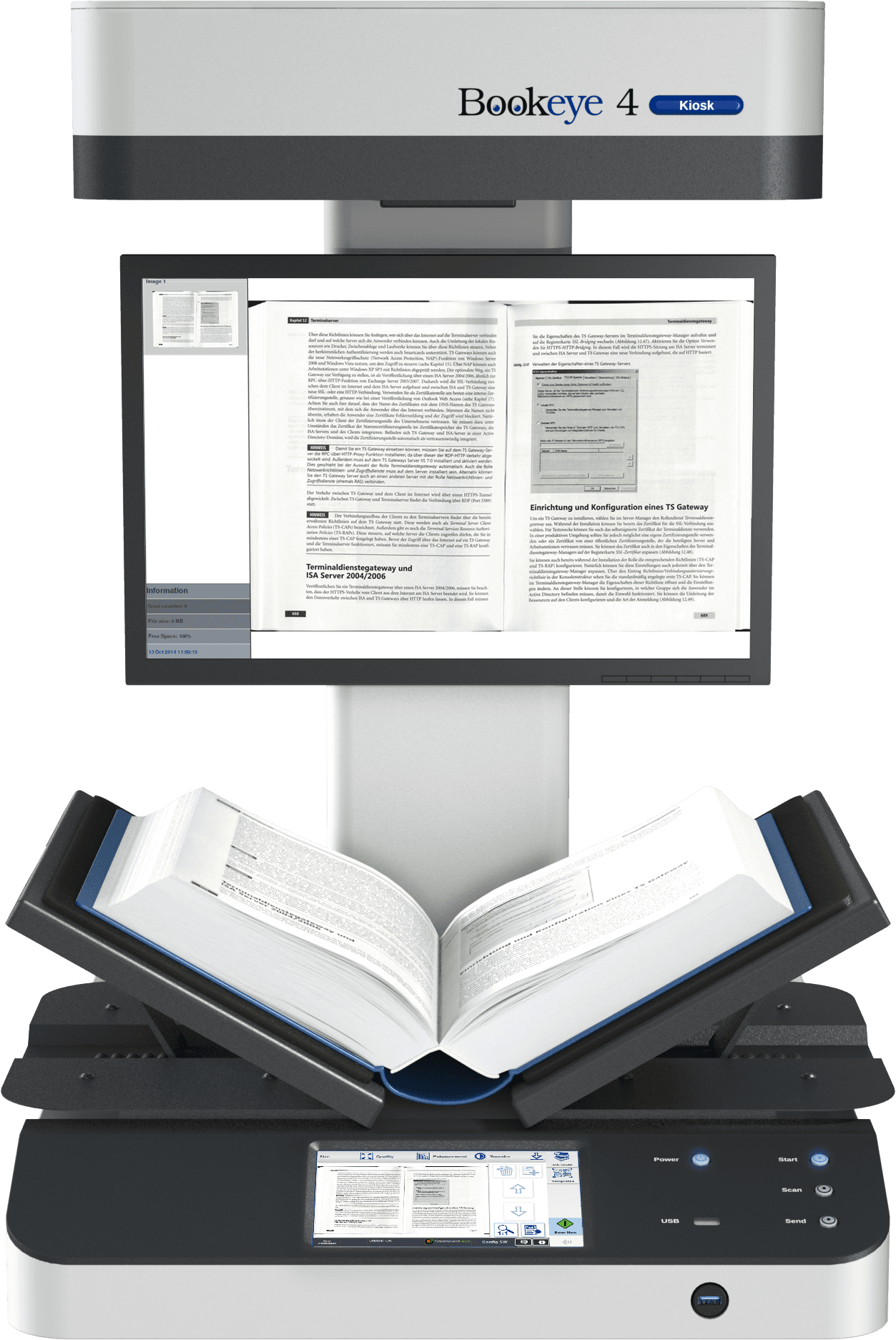
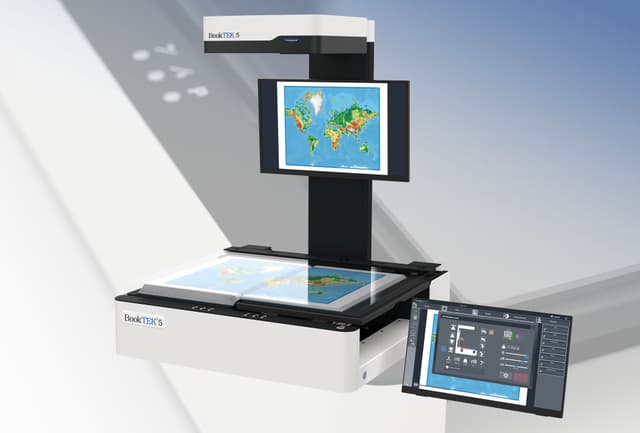
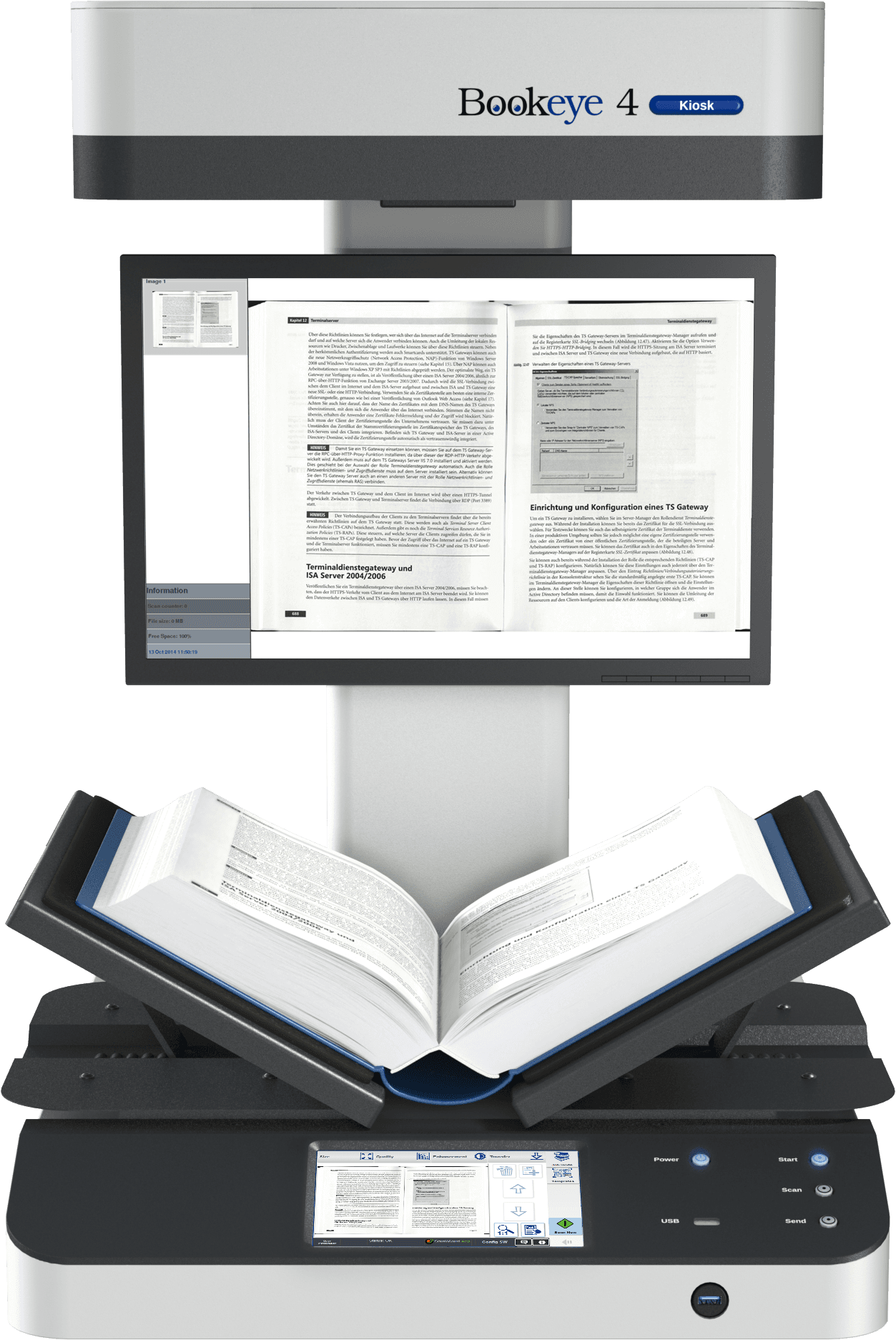
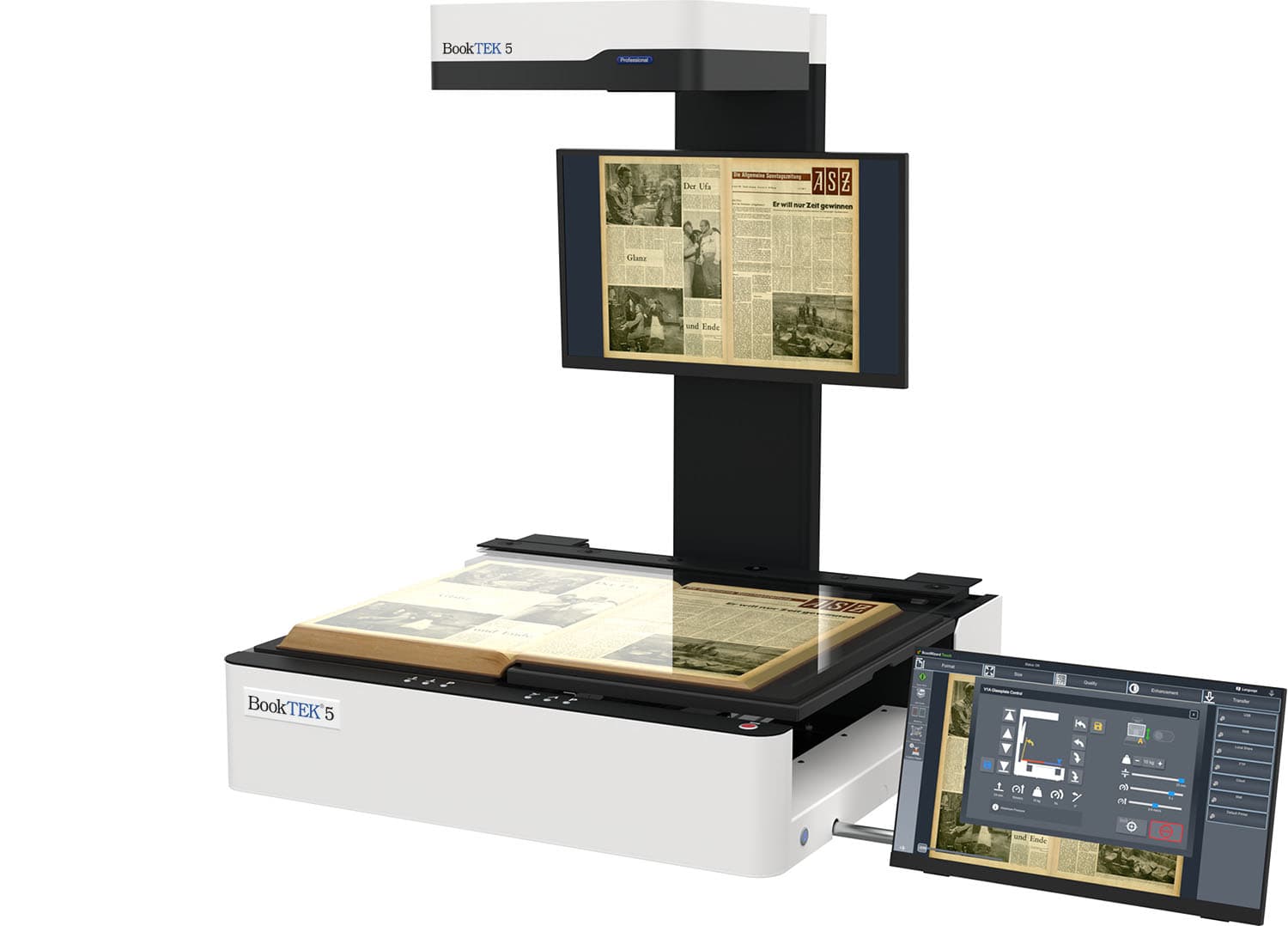
A book scanner is a specialized overhead or V-shaped scanner that digitizes bound volumes without damaging them — the book rests open in a cradle and is imaged from above, so nothing has to be unbound or pressed flat. This non-destructive design is why libraries, archives, and records offices use them for rare, fragile, or irreplaceable material. According to manufacturer specifications, models such as the Bookeye series handle volumes up to roughly 19 inches thick and capture at up to 600 DPI, producing images suitable for OCR and long-term preservation. According to the Federal Agencies Digital Guidelines Initiative's Technical Guidelines for Digitizing Cultural Heritage Materials (3rd edition, 2023), the top tier — four-star, or 4 out of 4 — is defined as the best imaging practical today, suitable for almost any use; ISO 19264-1:2021 defines the objective test method for that quality on reflective originals like books. Compact self-service models scan in roughly 1.3–1.6 seconds per page at 300 DPI, while heavy-duty motorized-cradle units for the thickest volumes run closer to 5 seconds per page. Reynolds Business Systems — a Laserfiche Certified Partner — supplies, installs, and services Bookeye and other V-shaped book scanners for libraries, archives, and government offices across Pennsylvania's Lehigh Valley, and can route digitized books directly into Laserfiche ECM for full-text search. Prepared by Reynolds Business Systems' document-solutions specialists, serving the Lehigh Valley since 1970; reviewed July 2026.